More Parents Saying “No, Thank You” to Vaccines and Other Unnecessary Interventions
Jennifer Margulis, PhD
A version of this article was first published on Jennifer Margulis’s Substack, Vibrant Life

Young families in America opting to have their babies in the hospital are increasingly opting out of routine newborn care.
Indeed, medical doctors are finding that some families are declining not only the birth dose of the hepatitis B vaccine (to prevent a sexually transmitted disease), but also other standard treatments like immediate cord clamping, injectable vitamin K (to aid in blood clotting), and antibiotic eye ointment (to prevent the spread of sexually transmitted and other infectious diseases), as well as the removal of the foreskin of an infant’s penis, aka circumcision, if the baby is a boy.
And let’s hope they’re also opting in: to exclusive breastfeeding, continuous skin-to-skin contact with their babies, zero separation of the baby from the parents, and even cloth instead of plastic diapering.
Does opting out get an A for awesome or for alarming?
It appears that younger Americans are no longer as willing to outsource their brains to the so-called experts as they have been in the past.
Instead, new parents are wanting to be active, informed participants in their infant’s care from the first moments of their baby’s life.
Many in the mainstream medical establishment find this trend alarming.
While doctors are finding themselves on the defensive and the mainstream news media is reporting that opting out of the hepatitis B vaccine and other unnecessary medical interventions during and after birth is a “dangerous” and “harmful” trend, the truth is that new parents are taking back their power.
In fact, they’re engaging in their first real act of advocacy for their families with these three very powerful words: “No, thank you.”
In other words, to new parents—as well as to those of us who have taken the time to do our own research and who have been sounding the alarm about these unnecessary and even harmful interventions for decades—this trend is a step in the right direction.
Where does opting out lead?
Towards a huge financial loss for the pharmaceutical industry and the doctors who have become their lackeys and towards better health for our babies and the entire country.
Hostility towards parents who want to do it their way
I’ve attended hospital births in the United States and several other countries as a birthing mother, a supportive friend, a patient advocate, a journalist, and an NGO employee.
Assuming I was on Team Hospital and not Team MomAndBaby, on-call obstetricians and labor and delivery nurses have made all sorts of telling remarks both directly to me and within my earshot.
Doctor A to Doctor B at a hospital in Atlanta, Georgia: “Room 12 has their birth plan taped to the door.” [rolls eyes] “As if they get to decide.”
Labor and Delivery Nurse (at the coffee station, speaking in a hushed voice) at a hospital in southern Oregon: “She thinks she’s going to have that baby vaginally. Not going to happen. I should know. I was induced and it didn’t go well” [pulls down her scrubs to show me a C-section scar].
Obstetrician based in the Midwest: “Homebirth is a trainwreck that always ends up at my doorstep at 3:00 a.m. Off the record, I do not support choices in childhood.”
I’ve witnessed and experienced the open hostility of so many in the birth industry towards birthing moms who choose to do things a gentler way. Chances are, if you’re reading this article, you have too.
Any parent who dives into the research soon learns that the majority of labor and postpartum practices are about maximizing profits not promoting pediatric health.
So the idea that parents are asking more questions, saying “No, thank you,” more often, and rewriting the thou-must-do-it-my-way medical script is the best news I’ve heard since Grandpa Gary told me about the bookshelf prank he pulled on his kids.

Parents finally asking “Why?”
My mom liked to say that a smart question deserves a smart answer. And these parents are asking smart questions:
1. Why rush to cut the cord when the research clearly shows that delayed cord clamping is better for the baby?
2. Why would a baby born to a hepatitis B–negative mother need a vaccine within a few hours of birth?
3. Why slather antibiotic goop in a newborn baby’s eyes when neither parent has any sexually transmitted disease and we know that antibiotics disrupt the baby’s microbiome; can be devastating, even lethal, for longterm health; and that the over-use of antibiotics is a global health threat?
4. Why cut off a important, functional, and highly erogenous part of a newborn’s penis when this is a practice that is almost never done for medical reasons in European countries where people, especially men, enjoy better health and longer lives?
5. Are these interventions—all of which involve a significant upcharge to the consumer by way of the insurance companies—truly needed or simply a routine way for hospitals to make more money and doctors to justify their jobs?
Misinformation or missing information?
We live in an information age where it’s easier to access scientific studies and find likeminded people than ever before.
The parents who are opting out the most often are the ones talking to regret moms who followed the doctors’ orders and ended up with severely immune-challenged and brain-damaged children.
Doctors entrenched in the status quo find all of this threatening.
As well they should.
There is a lot of misinformation out there. There’s also a lot of missing information.
“When you look at a child who’s innocent and vulnerable—and a simple intervention that’s been done since 1961 is refused—knowing that baby’s going out into the world is super worrisome to me,” Idaho-based pediatrician Tom Patterson, recently told a journalist from CNN in reference to parents opting out of injectable vitamin K.
Listening to the doctor’s answers to their questions, weighing the absolute versus the relative risk of any intervention, and deciding—say—that your newborn who doesn’t have hepatitis B and who has no possible route of exposure can safely delay getting a hepatitis B vaccine, perhaps indefinitely, doesn’t make you or your family “reckless,” “stupid,” or “irresponsible.”
It is the parents, after all—not the doctors, nurses, public health officials, or angry posters on the internet—who have to live with the consequences of the choices we make for our infants.
Some clinicians report that when they take time to calmly and respectfully explain the risks and benefits of routine postpartum care, doubting parents will ultimately say okay.
But many will not.
After careful consideration, these parents choose not to conform to the standard of care.
A new family’s choice to do nothing—no cord clamping, no circumcision, no hepatitis B vaccine, no injectable vitamin K, no newborn bath, no eye ointment, no supplementing with pesticide-laden artificial milk products, no allowing the baby to be taken to the nursery—is deeply uncomfortable for doctors inside a medical system that profits off docility and compliance.
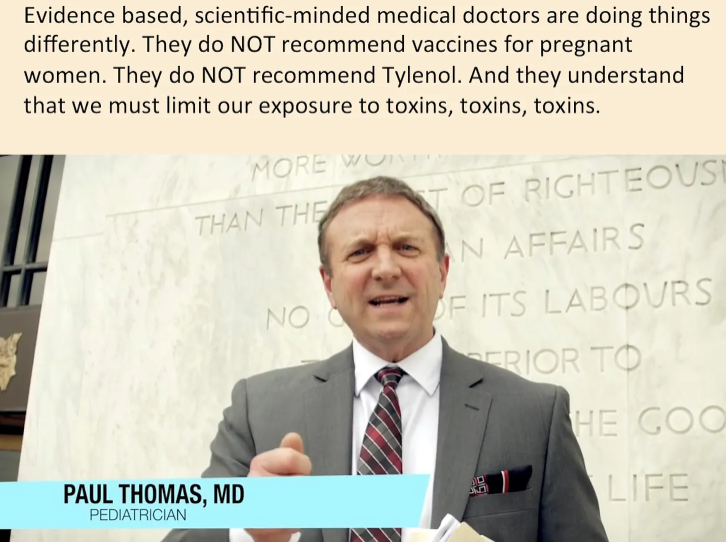
There’s a reason we call it “doctor’s orders.” Conventional medical doctors aren’t used to being questioned.
Or having their advice ignored.
At the same time, without getting into the debates surrounding each of these interventions, perhaps we can agree that it’s never a good idea to live a life on autopilot. Not for parents. Not for doctors.
We all understand that no two human fingerprints are alike. So it shouldn’t be that hard to understand that one-size-fits-all makes no sense for brand new humans.
That new parents are increasingly unsatisfied with rote answers gives me hope for humanity.
Let’s hope this is the beginning of a new and lasting trend: to reject one-size-fits-all profit-motivated medicine in favor of gentler, healthier, and less profit-driven care.

About the author: Jennifer Margulis, Ph.D., is an award-winning science journalist, Fulbright grantee, and sought-after speaker.
She writes a popular Substack that has over 20,000 subscribers, Vibrant Life, and is a regular contributor to The Epoch Times. A different version of this article first appeared in print in the magazine Radiant Life.

Bioregulatory medicine is a total body (and mind) approach to health and healing that aims to help facilitate and restore natural human biological processes. It is a proven, safe, gentle, highly effective, drugless, and side-effect-free medical model designed to naturally support the body to regulate, adapt, regenerate, and self-heal. BRMI is a non-commercial 501(c)(3) foundation and will expand and flourish with your support. Our goal is to make bioregulatory medicine a household term.
This article is for informational purposes only and is not intended to be a substitute for the direct care of a qualified health practitioner who oversees and provides unique and individualized care. The information provided here is to broaden our different perspectives and should not be construed as medical advice, diagnosis, or treatment.