Hovenia dulcis & Dihydromyricetin (DHM)
A Botanical and Biochemical Perspective on Liver Protection and Alcohol Metabolism
Dr. James Odell, ND, OMD, L.Ac.
An Ancient East Asian Tree with Modern Clinical Relevance
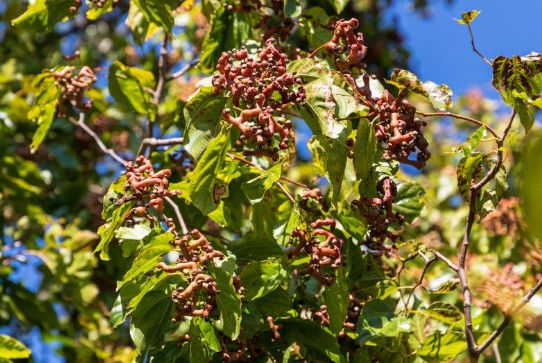
Hovenia dulcis (commonly known as the Japanese raisin tree; alternatively referred to as the Japanese cherry tree or Chinese raisin tree) belongs to a small genus within the Rhamnaceae family and is indigenous to East Asia. Its natural distribution ranges from Japan, Korea, and eastern China to the Himalayas, at altitudes of up to 2,000 m. It grows preferentially in sunny, moist, sandy, or loamy soils.
It is a glabrous tree with lenticulate branches and grows up to 10 meters in height. Hovenia dulcis is cultivated in plantations in China for its medicinal use. It has become invasive in South American rainforests (notably Brazil) as well as in Tanzania. It has also been introduced as an ornamental tree in several countries, including the United States, Australia, New Zealand, and parts of Central Africa.
Traditional Use and Historical Recognition in Liver Health
The tree is renowned for its numerous health benefits when consumed as a tea or extract, and it also produces edible fruit. It has been used for centuries in Traditional Chinese Medicine as a remedy for alcohol poisoning and hangover. Hovenia dulcis is listed among the premier liver herbs and anti-hangover remedies in the Chinese pharmacopoeia, including the Tang Materia Medica. It is effective for various liver diseases and alcohol intoxication, partly due to its active compound, dihydromyricetin (DHM).
Dihydromyricetin (DHM): A Bioactive Flavonoid from Hovenia dulcis
Dihydromyricetin (DHM), also known as ampelopsin, is a natural flavonoid compound found in high concentrations in Hovenia dulcis and other plants. This flavonoid may help the body metabolize alcohol (ethanol, EtOH) more efficiently by enhancing the activity of alcohol dehydrogenase (ADH) and acetaldehyde dehydrogenase (ALDH).
Ethanol catabolism is mediated by ADH and ALDH: ADH converts ethanol into acetaldehyde, which is then oxidized by ALDH into the nontoxic metabolite acetyl-CoA. Thus, potential mechanisms of Hovenia dulcis extracts involve direct or indirect regulation of the expression or activity of these enzymes. However, the full spectrum of active constituents and their exact mechanisms of action has not yet been completely elucidated.
Systemic Effects Beyond Alcohol Metabolism
Like other flavonoids, dihydromyricetin exhibits a range of biological effects. DHM demonstrates anti-inflammatory, cardioprotective, and dermaprotective properties. By influencing oxidized cholesterol metabolism, DHM may inhibit the development of atherosclerosis. Its positive effects on insulin resistance appear to be related to its ability to lower blood glucose levels, and dihydromyricetin has been shown to suppress diabetic cardiomyopathy.
DHM may act as a scavenger of reactive oxygen species (ROS), protecting tissues from oxidative stress, or alternatively may potentiate ROS generation selectively in cancer cells without affecting normal cells. Most notably, DHM has demonstrated significant hepatoprotective effects. Its beneficial influence on alcohol-induced and other liver diseases has been demonstrated in studies of acute liver injury.
Biochemical and Neuroregulatory Mechanisms of Action
The impact of DHM on ethanol consumption has been partially explained by its competitive inhibition at benzodiazepine binding sites on GABAA_AA receptors. Experimental studies have shown that ethanol intoxication in rats was reduced following DHM administration, and symptoms of alcohol withdrawal syndrome were mitigated.
The hepatoprotective effects of DHM are likely linked to its ability to protect liver cells from oxidative stress and inflammatory responses. Studies using human umbilical vein endothelial cells and the human hepatocellular carcinoma cell line HepG2 have demonstrated that DHM influences intracellular regulatory mechanisms that reduce ROS levels.
Experimental Models, Enzyme Modulation, and Remaining Questions
Available data suggest that DHM, when used as a dietary supplement, may reduce oxidative damage to hepatocytes. However, the precise mechanisms underlying its hepatoprotective effects against alcohol remain incompletely understood. Many studies rely on experimental models such as HepG2 cells, which lack fully functional enzymes for oxidative ethanol metabolism.
Additional research using hepatoblastoma cells has shown that DHM supplementation significantly increases both the activity and expression of alcohol dehydrogenase and aldehyde dehydrogenase. Notably, CYP2E1—an enzyme involved in ethanol metabolism, particularly during chronic alcohol exposure—was significantly downregulated by DHM in mouse models.
Although DHM’s health-promoting effects appear largely related to reductions in oxidative stress, its exact role in ethanol metabolism remains unclear. While several hypotheses have been proposed, a definitive mechanism has yet to be established.
Modern Use: Teas, Extracts, and Supplemental Formulations
DHM is commercially available as an extract and is often combined with other liver-supportive herbal extracts (such as milk thistle) and compounds (such as N-acetylcysteine [NAC]). These formulations are marketed for liver support and hangover relief. Typical daily doses of DHM range from 300 to 1,000 mg.
Limited short-term human studies have reported no significant adverse effects or evidence of toxicity to date. Some sources report mild side effects, including drowsiness, dizziness, and dry mouth.
This information is not intended as medical advice. Consultation with a qualified healthcare professional is recommended before using any new supplement.
References:
An SW, Kim YG, Kim MH, Lee BI. Comparison of hepatic detoxification activity and reducing serum alcohol concentration of Hovenia dulcis Thunb and Alnus japonica Steud. Korean J Med Crop Sci 1999; 7: 263268.
Castro, Tatiana Carvalho de, Victor Leonardo Bastos Pelliccione, Maria Raquel Figueiredo, Renata Oliveira de Araújo Soares, Marcelo T. Bozza, Vera Regina Campos Viana, Norma Albarello, and Solange Faria Lua Figueiredo. "Atividade antineoplásica e tripanocida de Hovenia dulcis Thunb. cultivada in vivo e in vitro." Revista Brasileira de Farmacognosia 12 (2002): 96-99.
Chen SH, Zhong GS, Li AL, Li SH, Wu LK. Influence of Hovenia dulcis on alcohol concentration in blood and activity of alcohol dehydrogenase (ADH) of animals after drinking. Zhongguo Zhong Yao Za Zhi 2006; 31: 1094–1096.
Chen, Jingnan, Xitong Wang, Tian Xia, Yanhua Bi, Bin Liu, Junfen Fu, and Runzhi Zhu. "Molecular mechanisms and therapeutic implications of dihydromyricetin in liver disease." Biomedicine & Pharmacotherapy 142 (2021): 111927.
Du, Jian, Da He, Lian-Na Sun, Ting Han, Hong Zhang, Lu-Ping Qin, and Khalid Rahman. "Semen Hoveniae extract protects against acute alcohol-induced liver injury in mice." Pharmaceutical biology 48, no. 8 (2010): 953-958.
Du, S. K., X. Y. Zhao, and Z. X. Li. "Hepatoprotective, weight-reducing and hypolipidemic effects of Hovenia dulcis Thunb. fruit vinegar." Food Sci 33, no. 1 (2012): 235-238.
Hong YL, Kim MH, Ahn C, Lee HY, Kim JD. Studies on the biological activities of the extract from Hovenia dulcis Thunb. Inst Agric Sci Kangwon Natl Uuniv 2000; 11: 1–11
Hyun, Tae Kyung, Seung Hee Eom, Chang Yeon Yu, and Thomas Roitsch. "Hovenia dulcis–an Asian traditional herb." Planta Medica 76, no. 10 (2010): 943-949.
Jeong, Chang-Ho, and Ki-Hwan Shim. "Some functional properties of extracts from leaf and fruit stalk of Hovenia dulcis." Food Science and Preservation 7, no. 3 (2000): 291-296.
Ji Y, Chen S, Zhang K, Wang W. Effect of Hovenia dulcis Thunb. on blood sugar and hepatic glycogen in diabetic mice. Zhong Yao Cai 2001; 25: 190–191
Kim SM, Kang SH, Ma JY, Kim JH. A study on extraction and efficacy of bioactive compound from Hovenia dulcis. Korea J Biotechnol Bioeng 2006; 21: 11–15
Kim MH, Chung YT, Lee JH, Park YS, Shin MK, Kim HS, Kim DH, Lee HY. Hepatic detoxification activity and reduction of serum alcohol concentration of Hovenia dulcis Thunb from Korea and China. Korean J Med Crop Sci 2000; 8: 225–233.
Ko B-S, Jang JS, Hong SM, Kim DW, Sung SR, Park HR, Lee JE, Jeon WK, Park S. Effect of new remedies mainly comprised of Hovenia dulcis Thunb. on alcohol degradation and liver protection in Sprague dawley male rats. J Korean Soc Food Sci Nutr 2006; 35: 828–834.
Li G, Min BS, Zheng C, Lee J, Oh SR, Ahn KS, Lee HK. Neuroprotective and free radical scavenging activities of phenolic compounds from Hovenia dulcis. Arch Pharm Res 2005; 28: 804–809.
Li, Gao, Byung-Sun Min, Changji Zheng, Joongku Lee, Sei-Ryang Oh, Kyung-Seop Ahn, and Hyeong-Kyu Lee. "Neuroprotective and free radical scavenging activities of phenolic compounds from Hovenia dulcis." Archives of Pharmacal Research 28, no. 7 (2005): 804-809.
Li, Hongliang, Qisheng Li, Zhaowen Liu, Kai Yang, Zhixi Chen, Qilai Cheng, and Longhuo Wu. "The versatile effects of dihydromyricetin in health." Evidence‐Based Complementary and Alternative Medicine 2017, no. 1 (2017): 1053617.
Wang, Ziyuan, Zhuoran Cao, Zhiying Yue, and Zhengfeng Yang. "Research progress of dihydromyricetin in the treatment of diabetes mellitus." Frontiers in Endocrinology 14 (2023): 1216907.
Zhang, Jingyao, Yun Chen, Huiqin Luo, Linlin Sun, Mengting Xu, Jin Yu, Qigang Zhou, Guoliang Meng, and Shengju Yang. "Recent update on the pharmacological effects and mechanisms of dihydromyricetin." Frontiers in pharmacology 9 (2018): 1204.

Bioregulatory medicine is a total body (and mind) approach to health and healing that aims to help facilitate and restore natural human biological processes. It is a proven, safe, gentle, highly effective, drugless, and side-effect-free medical model designed to naturally support the body to regulate, adapt, regenerate, and self-heal. BRMI is a non-commercial 501(c)(3) foundation and will expand and flourish with your support. Our goal is to make bioregulatory medicine a household term.
This article is for informational purposes only and is not intended to be a substitute for the direct care of a qualified health practitioner who oversees and provides unique and individualized care. The information provided here is to broaden our different perspectives and should not be construed as medical advice, diagnosis, or treatment.