
Red Light Therapy: A Passing Trend or a Powerful Therapeutic Tool?
James Odell, OMD, ND, L.Ac.
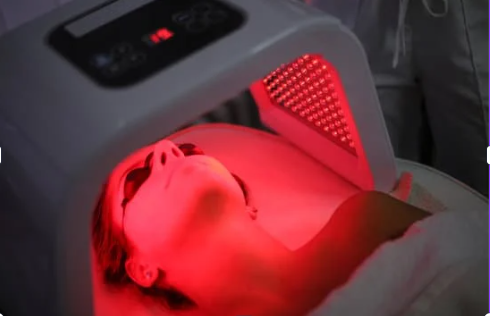
What Is Red Light Therapy?
Red light therapy, also known as photobiomodulation, uses low-wavelength red light (typically 620–750 nanometers) to support cellular function, reduce inflammation, and promote tissue repair. This wavelength range has the longest wavelength and lowest energy within the visible spectrum, allowing it to penetrate deeper into tissues with minimal scattering.
Because red light scatters the least in the atmosphere, it can travel farther than other visible wavelengths—one reason it is used for stop signs and rear lights. This same property also allows it to reach deeper layers of the body, making it particularly effective for therapeutic applications.
Key Applications and Benefits
Red light therapy has gained widespread attention for its versatility across multiple systems in the body:
Skin Health and Regeneration
By stimulating collagen production and cellular repair, red light therapy can improve skin elasticity, reduce fine lines and wrinkles, and support more even skin tone. It is also used for conditions such as acne, psoriasis, eczema, and wound healing.
Pain Relief and Inflammation Reduction
Its ability to penetrate deeply into tissues makes it valuable for managing chronic pain conditions such as arthritis, fibromyalgia, and muscle soreness. By modulating inflammatory pathways, it helps reduce discomfort and supports recovery.
Athletic Performance and Recovery
Athletes use red light therapy to enhance performance, reduce muscle fatigue, and accelerate post-exercise recovery by improving circulation and tissue repair.
Hair Growth Support
Red light therapy can stimulate hair follicles and increase blood flow to the scalp, supporting hair growth and thickness in individuals experiencing thinning or hair loss.
Neurological and Cognitive Support
Emerging research suggests potential neuroprotective effects, including reducing inflammation in the brain and supporting cognitive function. It is being explored for conditions such as Alzheimer’s disease, Parkinson’s disease, and traumatic brain injury.
Sleep, Mood, and Immune Function
Unlike white light, which can suppress melatonin, red light may support natural circadian rhythms and improve sleep quality. It may also enhance serotonin levels, contributing to mood balance and overall well-being, while supporting a healthy immune response.
A Brief History of Light as Medicine
The therapeutic use of light dates back to ancient civilizations. Egyptian, Indian, and Chinese cultures utilized sunlight (heliotherapy) to treat a range of conditions—from skin disorders to systemic illness.
A major advancement came with Danish physician Niels Ryberg Finsen, who demonstrated that concentrated light—particularly ultraviolet—could effectively treat diseases such as lupus vulgaris. Using sunlight and carbon-arc lamps, he developed innovative methods that successfully treated skin conditions and helped revolutionize dermatology. He also observed that red light exposure could prevent the formation and discharge of smallpox pustules, suggesting an early therapeutic role for this wavelength. These discoveries marked the beginning of modern phototherapy using artificial irradiation sources and ultimately earned him the Nobel Prize.
The real breakthrough occurred somewhat by accident. Hungarian surgeon Endre Mester was investigating the potential cancer risks of low-powered lasers when he applied them to shaved mice. Instead of inducing harm, he observed an unexpected effect: the light stimulated hair growth and accelerated wound healing. This serendipitous discovery became the foundation of modern photobiomodulation.
Since then, photomedicine has evolved into a dynamic field with both established clinical applications and expanding research frontiers. It is now widely used in wound healing, inflammation reduction, and pain management, while ongoing studies explore its potential in more complex conditions, including stroke, traumatic brain injury, global ischemia, Alzheimer’s disease, Parkinson’s disease, PTSD, and depression.
Mester’s famous reflection—“the laser is a solution looking for a problem”—continues to feel remarkably relevant as new therapeutic possibilities continue to emerge.
Later, NASA researchers studying plant growth under LED light noticed accelerated healing in human tissue, further validating the therapeutic potential of light.
Today, red light therapy is widely used in clinical and wellness settings for skin health, pain management, and recovery.
Mechanism of Redlight Therapy
At the cellular level, red light therapy exerts its effects by interacting with the mitochondria—the energy-producing centers of the cell. Specifically, red light is absorbed by an enzyme called cytochrome c oxidase, a key component of the mitochondrial respiratory chain. This interaction enhances the production of adenosine triphosphate (ATP), the primary fuel cells use for repair, regeneration, and overall function. As ATP levels increase, cells are better equipped to carry out the processes necessary for healing and optimal performance.
Core Biological Effects
Increased cellular energy (ATP production)
Enhances mitochondrial function, providing cells with the energy needed for repair, regeneration, and optimal performance.
Improved circulation and oxygen delivery
Stimulates nitric oxide release, promoting vasodilation and increasing blood flow to deliver oxygen and nutrients more efficiently.
Reduced inflammation
Modulates inflammatory pathways by decreasing pro-inflammatory cytokines and supporting anti-inflammatory signaling.
Enhanced tissue repair and regeneration
Supports cellular turnover, wound healing, and recovery of damaged tissues.
Collagen production and skin integrity
Stimulates fibroblast activity, improving skin elasticity, texture, and overall structural support.
Antioxidant support and reduced oxidative stress
Strengthens the body’s natural defense systems against free radical damage.
Gene expression and cellular signaling
Influences key biological pathways that support cell survival, resilience, and adaptation.
Safety and Considerations
Red light therapy is generally considered safe, non-invasive, and well-tolerated. Unlike ultraviolet light, it does not burn or damage the skin.
Possible mild side effects may include:
Temporary redness
Mild eye strain (protective goggles are recommended)
Skin sensitivity with excessive use
It is advisable to consult a healthcare provider before use, particularly for individuals who are pregnant, have photosensitive conditions, or take light-sensitive medications.
Devices and Accessibility
Red light therapy is available in both clinical and at-home settings. In physical therapy and dermatology clinics, treatments are typically administered using medical-grade devices and can range from approximately $50 to $200 per session. For those seeking a more accessible option, a wide variety of home devices are also available.
Devices
Panels: Ideal for full-body use ($300–$1,000+)
Caps/Masks: Designed for scalp or facial treatments
Wands/Pads: Targeted applications for joints or small areas
Beds: Found in some high-end gyms and spas
While at-home devices are generally safe and convenient, they are often less powerful than those used in clinical settings. As a result, outcomes may be more gradual and may require greater consistency to achieve noticeable results.
Final Thoughts
Red light therapy sits at an interesting intersection—where ancient wisdom meets modern science, and where a simple natural force reveals complex biological effects. While it may be easy to dismiss it as just another wellness trend, the growing body of research suggests there is something far more meaningful at play.
At its core, red light therapy does not force the body to heal—it supports it. By enhancing cellular energy, improving circulation, and helping to regulate inflammation, it works with the body’s innate intelligence rather than against it. This distinction is subtle, yet profound.
That said, it is not a panacea. Like many therapies that operate at a foundational level, its effects are often cumulative and require consistency, patience, and context within a broader approach to health. Perhaps the real value of red light therapy is not in the hype surrounding it, but in what it represents: a shift toward therapies that respect the body as a dynamic, self-regulating system.
Sources:
Avci, Pinar, Asheesh Gupta, Magesh Sadasivam, Daniela Vecchio, Zeev Pam, Nadav Pam, and Michael R. Hamblin. "Low-level laser (light) therapy (LLLT) in skin: stimulating, healing, restoring." In Seminars in cutaneous medicine and surgery, vol. 32, no. 1, p. 41. 2013.
Bloch, Harry. "Solartheology, heliotherapy, phototherapy, and biologic effects: a historical overview." Journal of the National Medical Association 82, no. 7 (1990): 517.
Couturaud, Virginie, Marie Le Fur, Michele Pelletier, and Frederic Granotier. "Reverse skin aging signs by red light photobiomodulation." Skin Research and Technology 29, no. 7 (2023): e13391.
Gáspár, Lajos. "Professor Endre Mester, the father of photobiomodulation." J Laser Dent 17, no. 3 (2009): 146-148.
Hamblin, Michael R. "Mechanisms and applications of the anti-inflammatory effects of photobiomodulation." AIMS biophysics 4, no. 3 (2017): 337.
Jandt, Klaus D., and Robin W. Mills. "A brief history of LED photopolymerization." Dental Materials 29, no. 6 (2013): 605-617.
Karrer, Sigrid, Anja Kathrin Bosserhoff, Petra Weiderer, Michael Landthaler, and Rolf-Markus Szeimies. "Influence of 5-aminolevulinic acid and red light on collagen metabolism of human dermal fibroblasts." Journal of investigative dermatology 120, no. 2 (2003): 325-331.
Kuppa, Sree Samanvitha, Ju Yeon Kang, Ja-Yeon Kim, Gidong Sa, Ji-Hyun Park, Jin-Hyeong Kim, Tae-Sung Ha, Jong Keun Seon, Hyung Keun Kim, and Jee-Bum Lee. "Red-light LED therapy promotes wound regeneration by upregulating COL1A1, COL2A1, VEGF and reducing IL-1β for anti-inflammation." Lasers in Medical Science 40, no. 1 (2025): 171.
Li, Wen‐Hwa, Ali Fassih, Curt Binner, Ramine Parsa, and Michael D. Southall. "Low‐level red LED light inhibits hyperkeratinization and inflammation induced by unsaturated fatty acid in an in vitro model mimicking acne." Lasers in surgery and medicine 50, no. 2 (2018): 158-165.
Russell, B. A., N. Kellett, and L. R. Reilly. "A study to determine the efficacy of combination LED light therapy (633 nm and 830 nm) in facial skin rejuvenation." Journal of Cosmetic and Laser Therapy 7, no. 3-4 (2005): 196-200.
Sloan, Mark. Red light therapy: miracle medicine. Lulu. com, 2020.
Trelles, Mario A., and Inés Allones. "Red light‐emitting diode (LED) therapy accelerates wound healing post‐blepharoplasty and periocular laser ablative resurfacing." Journal of Cosmetic and Laser Therapy 8, no. 1 (2006): 39-42.
Whelan, Harry T., John M. Houle, Noel T. Whelan, Deborah L. Donohoe, Joan Cwiklinski, Meic H. Schmidt, Lisa Gould et al. "The NASA light-emitting diode medical program—progress in space flight and terrestrial applications." In AIP Conference Proceedings, vol. 504, no. 1, pp. 37-43. American Institute of physics, 2000.
Wunsch, Alexander, and Karsten Matuschka. "A controlled trial to determine the efficacy of red and near-infrared light treatment in patient satisfaction, reduction of fine lines, wrinkles, skin roughness, and intradermal collagen density increase." Photomedicine and laser surgery 32, no. 2 (2014): 93-100.
Yeager, Ronnie L., Deanna A. Oleske, Ruth A. Sanders, John B. Watkins III, Janis T. Eells, and Diane S. Henshel. "Melatonin as a principal component of red light therapy." Medical hypotheses 69, no. 2 (2007): 372-376.
Zhang, Yiqiu, Wei Ni, Jianghan Li, Yubing Bai, Yier Bai, Zhixuan Jiang, Jiadie Wang et al. "650 nm red-light therapy attenuates sepsis-induced acute lung injury via adiponectin-mediated immune–metabolic reprogramming." Frontiers in Immunology 17 (2026): 1710363.
Zhevago, Natalya A., Kira A. Samoilova, and Ksenya D. Obolenskaya. "The regulatory effect of polychromatic (visible and infrared) light on human humoral immunity." Photochemical & Photobiological Sciences 3, no. 1 (2004): 102-108.

Bioregulatory medicine is a total body (and mind) approach to health and healing that aims to help facilitate and restore natural human biological processes. It is a proven, safe, gentle, highly effective, drugless, and side-effect-free medical model designed to naturally support the body to regulate, adapt, regenerate, and self-heal. BRMI is a non-commercial 501(c)(3) foundation and will expand and flourish with your support. Our goal is to make bioregulatory medicine a household term.
This article is for informational purposes only and is not intended to be a substitute for the direct care of a qualified health practitioner who oversees and provides unique and individualized care. The information provided here is to broaden our different perspectives and should not be construed as medical advice, diagnosis, or treatment.


