Ibogaine: Ancient African Medicine, Addiction Treatment, and the Science of Neuroplasticity
James Odell, ND, OMD, L.A.c
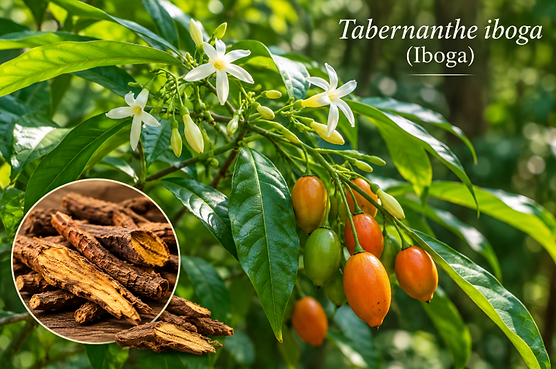
Ibogaine is found in a number of plants, principally in iboga (Tabernanthe iboga), a member of the dogbane, or Apocynaceae, family. The Apocynaceae family is known for its chemical sophistication and its remarkable diversity of biologically active compounds, including alkaloids and cardiac glycosides that can interact powerfully with animal physiology.
Iboga is a rainforest shrub native to West-Central Africa, particularly Gabon, the Democratic Republic of the Congo, and the Republic of the Congo. It grows well in the undergrowth of tropical forests, ideally in rich, well-drained soil in a protected, partly shady position. The plant bears dark-green, narrow leaves and clusters of white tubular flowers on an erect and branching stem; its yellowish-orange fruit is roughly the size of an olive.
Traditionally, the root and root bark have been used medicinally and ceremonially and are the primary sources of ibogaine and other psychoactive alkaloids. Iboga is particularly unusual within the dogbane family for its long-established ceremonial use for its psychoactive and visionary effects.
Indole alkaloids comprise approximately 6% of the root, which contains more than thirty alkaloids. The most studied is ibogaine, but others include ibogamine, ibogaline, tabernanthine, coronaridine, and voacangine. These alkaloids work together in whole root bark in ways that isolated ibogaine alone does not fully replicate. Numerous other compounds are found in iboga (eg, coronaridine, isovoacangine, conophararyngine).

West African cultures have long used iboga root in initiation rites—including ceremonies intended to catalyze profound spiritual discovery—as well as an aphrodisiac and stimulant to combat fatigue, hunger, and thirst. Today, ibogaine is being studied and clinically used in some settings as a potential long-acting treatment for opioid and stimulant use disorders, as well as for PTSD, depression, and anxiety.
Understanding Terminology: Iboga, Ibogaine, and Noribogaine
Iboga refers to the whole plant and, most commonly, to the raw root bark used in traditional practice. It contains the full spectrum of 30 (known) alkaloids.
Ibogaine is the primary psychoactive alkaloid extracted from iboga root bark (or semi-synthesized from voacangine, found in Voacanga africana). It is the compound used in most clinical research and in clinical treatment settings. Its half-life in humans is approximately 7 hours.
Noribogaine is ibogaine's primary metabolite, produced by the liver after ibogaine ingestion. It has a much longer half-life (24–50 hours) and acts primarily as a serotonin reuptake inhibitor and kappa-opioid receptor agonist. Noribogaine has been classified as a “psychoplastogen”—a compound that promotes structural and functional neural plasticity. The sustained presence of noribogaine is thought to be one reason ibogaine's effects persist well beyond the acute experience.
History
The history of ibogaine spans centuries of traditional African use and has experienced a modern rebirth as an underground addiction treatment. Iboga was initially discovered by the Pygmy (Baka, Babongo) people in West-Central Africa. The pygmy Baka and Babongo pygmies are known for their long tradition of using iboga. Initially, these communities kept their knowledge of iboga secret. Over time, they introduced the plant to other groups in the region, including the Apindji, Mitsogho, and later the Punu of southern Gabon. Also the Bwiti and Mbiri tribes in West Central Africa used the root bark of the Tabernanthe iboga shrub in religious rituals for spiritual contact and initiation.
Oral traditions add a more vivid layer to this history. In Gabon, there is broad agreement that forest-dwelling Pygmy peoples were the earliest keepers of iboga knowledge and later shared it with Bantu peoples, although different communities preserve different accounts of exactly how that knowledge was first received. Some traditions connect the discovery of iboga with close observation of forest animals known to consume the plant, including porcupines, gorillas, baboons, parrots, and elephants. These accounts belong to oral tradition rather than documented history, but they reflect iboga’s deep relationship with the forest and the peoples who have lived there for generations.
Within Bwiti traditions, iboga came to be regarded not simply as an intoxicant but as a sacred medicine—sometimes called bois sacré, or “sacred wood.” In initiation ceremonies, larger amounts are used to produce a prolonged visionary, dreamlike state associated with rites of passage, healing, encounters with ancestors, and a profound review of one’s life and place within family and community. Smaller amounts have traditionally been used to reduce fatigue, hunger, thirst, and the need for sleep, particularly during hunting and other demanding activities.
The ritual use of iboga in Africa was first reported by French and Belgian explorers in the 19th century, beginning with the work of French naval surgeon and explorer of Gabon Griffon du Bellay, who identified it correctly as a shrub belonging to the Apocynaceae – as recorded in a short essay by Charles Eugène Aubry-Lecomte on the plant poisons of West Africa, published in the year 1864. French explorers brought iboga root back to Europe, and ibogaine-containing preparations were subsequently sold in France for decades.
The written Western record began even earlier: in 1819, English traveler Edward Bowditch described iboga—then recorded as ‘eroga’—as a powerful medicine used in Gabon. In 1864, French naval surgeon and explorer Marie-Théophile Griffon du Bellay brought specimens of Tabernanthe iboga to France, helping introduce the plant to European botanical and medical circles. Ibogaine itself was first isolated from the plant in 1901 by Dybowski and Landrin, marking the transition from an ancestral plant medicine to a chemically defined alkaloid studied by Western science.
Thus, from the 1930s through the 1960s, ibogaine was sold in France as Lambarène, and promoted as a mental and physical stimulant. It was formulated at doses of 200 mg extract containing low doses of 4 to 8 mg ibogaine per tablet. The product was also popular among post-World War II athletes. Lambarène was withdrawn from the market in 1966 when the sale of ibogaine-containing products became illegal in France, allegedly because of its adverse side effects.
What makes Lotsof’s observation especially remarkable is that he was not seeking a treatment for addiction. He took ibogaine for its psychoactive effects and only afterward realized that his expected heroin withdrawal and craving had dramatically changed. In that sense, ibogaine’s modern anti-addiction story was a serendipitous rediscovery: a substance long used in Central African traditions for profound introspection and transformation unexpectedly revealed a possible biological ability to interrupt dependence as well.
The modern anti-addiction movement began in 1962 when a 19-year-old heroin user named Howard Lotsof took ibogaine recreationally and reported that his cravings vanished. Lotsof was one of the first known people to describe its effects on drug dependence. About 36 hours after taking ibogaine, the psychoactive state it had induced began to wear off, yet the heroin withdrawal symptoms he usually experienced were absent. While he once thought of heroin’s high as euphoric, he now saw it as an emulation of death.
Lotsof began encouraging researchers, public officials, and pharmaceutical companies to study ibogaine’s potential as an addiction interrupter, and in 1982 he created the Dora Weiner Foundation, named for his grandmother, in order to work for the development of ibogaine medicine. But the foundation had difficulty obtaining funding for research, largely because the pharmaceutical industry was uninterested in developing the plant substance into a drug.
In 1986, Lotsof obtained patents on ibogaine for heroin, cocaine, amphetamine, alcohol, nicotine, and polysubstance abuse, after which he formed the private company NDA International.3 He began working with international partners on laboratory studies, which showed efficacy in animals. From 1991 to mid-1993, NDA co-sponsored several non-medicalized human studies in the Netherlands and one in Panama, with 2 other addict treatment organizations.
Many addicts in these studies reported improvements in withdrawal, drug-seeking behaviors, and the length of time before relapse,3 and it has been reported that about two-thirds of them stopped using drugs for 4 months to 4 years.1 This was an improvement compared with conventional addiction treatment, after which addicts usually relapse within 6 months. In 1993, however, a female subject in one of NDA’s Dutch studies died, and though ibogaine was not suspected to be the cause of death, NDA stopped its treatment programs in the Netherlands. According to Rick Doblin, PhD, founder and executive director of the Multidisciplinary Association for Psychedelic Studies (MAPS), who knew Lotsof for about 20 years, Lotsof sympathized with the family of the deceased woman and had great compassion for those who have died in treatment clinics. He thought these deaths could have been avoided if studies were conducted in more medicalized settings.
Lotsof spent the rest of his life advocating for ibogaine. He later formed self-help groups that provided public testimonials, claiming a single dose could stop withdrawal and prevent relapses for months. Despite the positive findings, the U.S. National Institute on Drug Abuse (NIDA) canceled plans for human studies in 1995, allegedly due to cardiotoxicity concerns (heart rhythm risks) and the fatality in Holland. Because ibogaine became a Schedule I drug in the U.S., treatment development moved offshore.
Ibogaine treatment clinics have emerged in Mexico, Panama, the Bahamas, St. Kitts, Canada, Costa Rica, the Netherlands, South Africa, and New Zealand, allowing people to seek treatment outside the U.S. Many Americans now travel abroad to clinics for treatment.
After decades of being marginalized, ibogaine has reemerged alongside the broader resurgence of psychedelic research. Researchers are now studying ibogaine analogs such as 18-Methoxycoronaridine (18-MC, or zolunicant), designed to retain anti-addiction effects while minimizing cardiac and other toxicities observed with ibogaine in animal models.
Mechanisms and Comparison of Ibogaine and 18-MC
For most individuals, ibogaine produces a two-phase experience—initially a visionary, dreamlike state with vivid imagery and altered perception, followed by an introspective period that may last days or weeks. Ibogaine has been referred to as an oneirogen (oneirophrenic or oneiric), or a hallucinogen that produces a dreamlike state of consciousness. This unique altered state of consciousness is shared with harmala alkaloids like harmaline but is distinct from that of other hallucinogens like serotonergic psychedelics such as LSD or psilocybin. Ibogaine may significantly decrease cravings for cocaine, heroin, alcohol, and tobacco. Depressive symptoms are also noted to be significantly lower after ibogaine treatment.
Ibogaine’s mechanism of action remains incompletely defined, which has complicated efforts to use it as a lead structure for drug development. Ibogaine is a tryptamine with complex actions across several neurotransmitter systems. It appears to have important affinities for N-methyl-D-aspartate (NMDA), kappa-opioid, sigma, and nicotinic receptors. Its activity at kappa-opioid receptors likely contributes to its psychoactive effects, while weak agonistic activity at serotonin 5-HT2A receptors may also play a role. Ibogaine also influences dopamine signaling and may help reverse some of the changes in gene expression and neuroreceptor function associated with chronic opioid exposure—potentially helping to disrupt entrenched addictive loops and pathways in the brain.
The N-methyl-D-aspartate (NMDA) receptor is among ibogaine’s most studied targets. This protein complex is embedded in the membranes of brain cells and plays a fundamental role in communication between neurons, learning, memory, and neuroplasticity.
Ibogaine’s anti-addictive effects may be partly related to its activity at nicotinic acetylcholine receptors in the brain—the same family of receptors activated by nicotine. This raises an interesting connection with nicotine patches, which deliver a slow, steady amount of nicotine and are best known for reducing cravings and withdrawal during smoking cessation. Nicotinic receptors, however, are involved in much more than nicotine dependence; they also influence attention, mood, inflammation, and reward pathways in the brain. Ibogaine does not act like a nicotine patch, but its interaction with this same receptor system suggests that nicotinic signaling may be one piece of its unusual ability to interrupt addictive patterns. Ibogaine’s long-lasting metabolite, noribogaine (12-hydroxyibogamine), may further contribute by increasing serotonin activity in the brain.
Animal studies comparing ibogaine with the pharmaceutical analogue 18-MC suggest that both compounds can alter dopamine signaling in the nucleus accumbens, a brain region central to reward and addiction. Ibogaine additionally affects serotonin signaling and has broader activity across NMDA, sigma, sodium-channel, and serotonin-transporter targets. These differences may help explain both ibogaine’s distinctive psychoactive effects and its more complex safety profile.
Although 18-MC and ibogaine share activity at kappa-opioid and possibly nicotinic receptors, 18-MC has substantially lower affinity for several other targets affected by ibogaine. This has made ibogaine-inspired analogs an important area of research aimed at preserving anti-addictive effects while reducing toxicity.
Neuroplasticity
Ibogaine can help promote CNS neuroplasticity—the brain’s ability to reorganize and form new neural connections throughout life. This adaptability allows the brain to respond to new information, environmental change, learning, and recovery from injury. In addiction and other mental health disorders, enhanced neuroplasticity may help loosen deeply established neural patterns and support the formation of healthier patterns of thought and behavior. This ability to promote neural change is increasingly considered central to ibogaine’s potential therapeutic effects.
Dosage
Note: The DEA has designated ibogaine a Schedule I substance under the Controlled Substances Act (CSA). It is a Schedule I hallucinogenic substance in the United States. Strict medical supervision is necessary with its use, and fatalities have been associated with ibogaine.
Research and clinical reports have used a wide range of ibogaine doses, including full therapeutic doses, lower doses, and very low or “microdose” approaches. Reported effects and duration vary substantially with dose, individual metabolism, health status, and treatment protocol. The dosage figures described in published studies and clinical protocols should be understood as research observations—not self-treatment recommendations—because ibogaine carries significant cardiac and drug-interaction risks.
Some clinics and research settings have used the “MISTIC protocol” (Magnesium-Ibogaine: Stanford Traumatic Injury to the CNS protocol), an approach combining ibogaine with magnesium supplementation in an effort to mitigate potential cardiotoxicity while retaining ibogaine’s neuroplastic and psychotherapeutic effects.
In the published Stanford study, magnesium sulfate was administered intravenously before ibogaine, followed by carefully measured oral ibogaine dosing and additional magnesium afterward. This medically monitored approach produced promising early results in veterans with traumatic brain injury and associated neuropsychiatric symptoms, including PTSD.
The protocol should not be interpreted as a general dosing guide; it was conducted in a controlled clinical setting with medical screening and monitoring.
Most ibogaine clinics advise avoiding certain medications and substances before treatment. This should be carefully supervised and individualized by the treating clinician, as some medications require medically supervised tapering weeks or months in advance. Ibogaine therapy is not a DIY treatment and should be undertaken only with appropriately trained medical supervision.
Substances to Stop or Avoid
Because they inhibit CYP2D6 or CYP3A4 liver enzymes (slowing ibogaine metabolism, raising blood levels):
SSRIs: fluoxetine (Prozac), paroxetine (Paxil), sertraline (Zoloft)
SNRIs: duloxetine (Cymbalta)
Bupropion (Wellbutrin)
Grapefruit and grapefruit juice (inhibits CYP3A4 - the same reason it interacts with many medications)
St. John's Wort
Because they prolong QT interval (compounding ibogaine's cardiac effect on heart rhythm length):
Quinine, including tonic water.
Certain antibiotics: azithromycin (Z-pack), fluoroquinolones
Certain antipsychotics: haloperidol, ziprasidone, quetiapine
Certain antiemetics: ondansetron (Zofran)
Methadone
Because of serotonin syndrome risk:
SSRIs, SNRIs, MAOIs (overlap with above)
Tramadol
Triptans (migraine medications like sumatriptan)
5-HTP supplements
High-dose tryptophan supplements
Because of additive stimulant or cardiovascular effects:
Caffeine—including coffee, energy drinks, pre-workout supplements, matcha, and tea
Cocaine, amphetamines, MDMA
All stimulants including Adderall, Vyvanse, Ritalin, Concerta
Modafinil
Other substances many treatment centers ask patients to avoid:
Alcohol
Opioids (including kratom, which has opioid receptor activity)
Cannabis (some clinicians restrict this, while others do not)
Kava (liver metabolism concerns)
Side Effects
Despite ibogaine’s promising therapeutic efficacy, major safety concerns have limited its use for clinical development. First and foremost, ibogaine is known to occasionally cause long-lasting hallucinations, and at very high doses it can lead to tremors. However, its cardiotoxicity has been the biggest concern. Ibogaine can lengthen the QT interval - the time it takes for the heart's electrical system to reset between beats. When this interval becomes too long, it can lead to dangerous irregular heartbeats or even fatal cardiac arrhythmias. Ibogaine inhibits hERG potassium channels in the heart, with deaths being linked to its adverse effects on heart function. Thus, a key challenge is its cardiac side effect - QT prolongation (heart rhythm risk).
For those with preexisting QT abnormalities, heart rhythm issues, or other QT-prolonging meds - this can be deadly. The vast majority of ibogaine-related deaths have occurred during high-dose detoxification procedures. The cardiac mechanism is dose-dependent yet not completely absent at lower doses.
Research suggests cardiac effects are driven by ibogaine itself (not its metabolite) and are strongly linked to CYP2D6 genotype, indicating a need for personalized dosing.
Clinical Research
Iboga and ibogaine have attracted interest for a wide range of physical, psychological, and spiritual effects. As previously discussed, one of the most notable modern applications is the treatment of substance use disorders, particularly opioid dependence. Studies and clinical observations suggest that ibogaine can significantly reduce withdrawal symptoms and cravings, sometimes with effects that persist beyond the acute experience. Emerging evidence also points to potential benefits for anxiety, PTSD, and depression. Ibogaine’s unusual combination of neurochemical effects, neuroplasticity, and profound psychological introspection may help address both the biological and psychological dimensions of addiction and trauma.
Stanley Glick was one of the first to conduct extensive research and published several articles. Research has been heavily focused on understanding its mechanism and managing cardiac risks.
A systematic review encompassing 24 studies and 705 individuals receiving ibogaine or noribogaine found evidence supporting reductions in withdrawal symptoms and craving, along with beneficial effects on depressive and trauma-related psychological symptoms. The evidence included randomized and controlled trials as well as open-label studies, case series, case reports, and retrospective data. At the same time, serious medical complications and deaths have been reported, highlighting the importance of careful screening, cardiac monitoring, and further rigorous clinical research.
An additional consideration may be the nutritional status of people seeking treatment for substance use disorders. Long-term drug and alcohol use is frequently accompanied by poor nutrition and deficiencies in vitamins, minerals, and electrolytes. This may be particularly important with ibogaine because low potassium and magnesium can increase susceptibility to QT prolongation and dangerous cardiac arrhythmias. Some researchers have proposed that these underlying deficiencies may act as a “second hit,” reducing the body’s physiological reserve and increasing ibogaine’s cardiac risk. Whether broader nutritional deficiencies also influence ibogaine’s therapeutic effects or the brain’s ability to respond to the treatment remains an intriguing but largely unexplored question.
Preclinical research and a case study of multiple sclerosis have indicated that ibogaine may increase myelination and reduce white matter lesion volume. These activities would support ibogaine as a compound of interest to facilitate neuronal repair in diseases of the central nervous system where white matter pathology is a central feature, e.g., opioid use disorders, traumatic brain injury and multiple sclerosis.
Conclusion
Nature may have provided a remarkable plant-derived tool for confronting the modern crisis of addiction. From its centuries-old role as a sacred West-Central African medicine to its unexpected emergence as an addiction interrupter and subject of modern neuroscience, ibogaine occupies a unique place at the intersection of traditional knowledge, consciousness, and neuroplasticity. Further studies are needed to better establish its efficacy, optimize its safety profile, and determine how it might be responsibly integrated into psychiatric and addiction care. As research continues, iboga and its alkaloids are likely to remain a compelling source of scientific discovery and therapeutic innovation.
References:
1. Baumann, Michael H., Richard B. Rothman, John P. Pablo, and Deborah C. Mash. "In vivo neurobiological effects of ibogaine and its O-desmethyl metabolite, 12-hydroxyibogamine (noribogaine), in rats." The Journal of Pharmacology and Experimental Therapeutics 297, no. 2 (2001): 531–539.
2. Brown, Thomas Kingsley, and Kenneth Alper. "Treatment of opioid use disorder with ibogaine: detoxification and drug use outcomes." The American Journal of Drug and Alcohol Abuse 44, no. 1 (2018): 24–36.
3. Cherian, Kirsten N., Jackob N. Keynan, Lauren Anker, Afik Faerman, Randi E. Brown, Ahmed Shamma, Or Keynan, et al. "Magnesium–ibogaine therapy in veterans with traumatic brain injuries." Nature Medicine 30, no. 2 (2024): 373–381.
4. Glick, S. D., S. M. Pearl, J. Cai, and I. M. Maisonneuve. "Ibogaine-like effects of noribogaine in rats." Brain Research 713, no. 1–2 (1996): 294–297.
5. Glick, Stanley D., and Isabelle M. Maisonneuve. "Mechanisms of antiaddictive actions of ibogaine." Annals of the New York Academy of Sciences 844, no. 1 (1998): 214–226.
6. Glick, Stanley D., Isabelle M. Maisonneuve, Lindsay B. Hough, Martin E. Kuehne, and Upul K. Bandarage. " (±)-18-Methoxycoronaridine: a novel iboga alkaloid congener having potential anti-addictive efficacy." CNS Drug Reviews 5, no. 1 (1999): 27–42.
7. Glick, Stanley D., Isabelle M. Maisonneuve, and Karen K. Szumlinski. "Mechanisms of action of ibogaine: relevance to putative therapeutic effects and development of a safer iboga alkaloid congener." (2001): 39–53.
8. Glick, S. D., M. E. Kuehne, I. M. Maisonneuve, U. K. Bandarage, and H. H. Molinari. "18-Methoxycoronaridine, a non-toxic iboga alkaloid congener: effects on morphine and cocaine self-administration and on mesolimbic dopamine release in rats." Brain Research 719, no. 1–2 (1996): 29–35.
9. Glick, Stanley D., Isabelle M. Maisonneuve, and Karen K. Szumlinski. "18-Methoxycoronaridine (18-MC) and Ibogaine: Comparison of antiaddictive efficacy, toxicity, and mechanisms of action." Annals of the New York Academy of Sciences 914, no. 1 (2000): 369–386.
10. Hearn, William L., John Pablo, George W. Hime, and Deborah C. Mash. "Identification and quantitation of ibogaine and an O-demethylated metabolite in brain and biological fluids using gas chromatography-mass spectrometry." Journal of Analytical Toxicology 19, no. 6 (1995): 427–434.
11. Iyer, Rishab N., David Favela, Guoliang Zhang, and David E. Olson. "The iboga enigma: the chemistry and neuropharmacology of iboga alkaloids and related analogs." Natural Product Reports 38, no. 2 (2021): 307–329.
12. Köck, Patrick, Katharina Froelich, Marc Walter, Undine Lang, and Kenneth M. Dürsteler. "A systematic literature review of clinical trials and therapeutic applications of ibogaine." Journal of Substance Abuse Treatment 138 (2022): 108717.
13. Koenig, Xaver, and Karlheinz Hilber. "The anti-addiction drug ibogaine and the heart: a delicate relation." Molecules 20, no. 2 (2015): 2208–2228.
14. Lissemore, Jennifer I., Anna Chaiken, Kirsten N. Cherian, Derrick Buchanan, Flint Espil, Jackob N. Keynan, Malvika Sridhar, et al. "Magnesium–ibogaine therapy effects on cortical oscillations and neural complexity in veterans with traumatic brain injury." Nature Mental Health 3, no. 8 (2025): 918–931.
15. Mash, Deborah C., Julie K. Staley, Michael H. Baumann, Richard B. Rothman, and W. Lee Hearn. "Identification of a primary metabolite of ibogaine that targets serotonin transporters and elevates serotonin." Life Sciences 57, no. 3 (1995): PL45–PL50.
16. Papiri, G., G. D’Andreamatteo, G. Cacchiò, S. Alia, M. Silvestrini, C. Paci, S. Luzzi, and A. Vignini. "Multiple sclerosis: inflammatory and neuroglial aspects." Current Issues in Molecular Biology 45, no. 2 (2023): 1443–1470.
17. Staley, J. K., Q. Ouyang, J. Pablo, W. L. Hearn, D. D. Flynn, R. B. Rothman, K. C. Rice, and D. C. Mash. "Pharmacological screen for activities of 12-hydroxyibogamine: a primary metabolite of the indole alkaloid ibogaine." Psychopharmacology 127 (1996): 10–18.
18. Sheppard, Simon G. "A preliminary investigation of ibogaine: case reports and recommendations for further study." Journal of Substance Abuse Treatment 11, no. 4 (1994): 379–385.
19. Wei, D., I. M. Maisonneuve, M. E. Kuehne, and S. D. Glick. "Acute iboga alkaloid effects on extracellular serotonin (5-HT) levels in nucleus accumbens and striatum in rats." Brain Research 800, no. 2 (1998): 260–268.

Bioregulatory medicine is a total body (and mind) approach to health and healing that aims to help facilitate and restore natural human biological processes. It is a proven, safe, gentle, highly effective, drugless, and side-effect-free medical model designed to naturally support the body to regulate, adapt, regenerate, and self-heal. BRMI is a non-commercial 501(c)(3) foundation and will expand and flourish with your support. Our goal is to make bioregulatory medicine a household term.
This article is for informational purposes only and is not intended to be a substitute for the direct care of a qualified health practitioner who oversees and provides unique and individualized care. The information provided here is to broaden our different perspectives and should not be construed as medical advice, diagnosis, or treatment.